
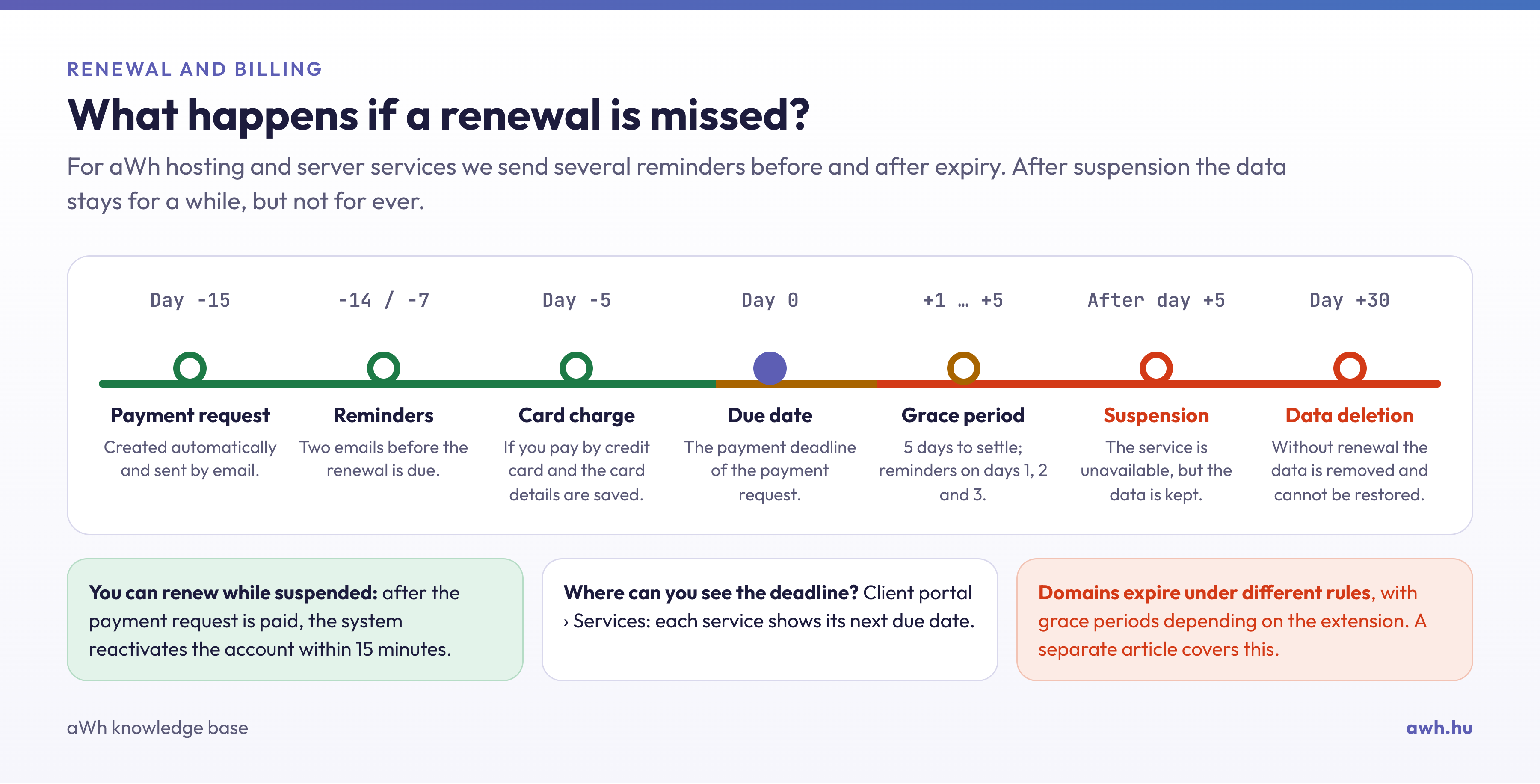
We will notify you of your renewal deadlines in several emails, and you can check the client portal at any time to see when each of your services is due for renewal. The timeline below applies to hosting and server services.
What sort of emails do we send?
- 15 days before the deadline: the system automatically generates the renewal payment request and sends it by email.
- 14 and 7 days in advance: we send a reminder about the upcoming due date.
- 5 days in advance: if you pay by credit card and your card details are backed up, we will deduct the fee at that time. If the payment cannot be processed, we will send you a separate notification.
- 1, 2 and 3 days after the due date: we will send a further reminder if the payment request has not yet been paid.
If you miss the deadline, we will grant you a further 5-day grace period to settle the payment request. After that, the service will be suspended; this article explains this process.
Where can I see the deadline?
On the client portal, on the Services page, the next due date is shown for each service. You can find issued but unpaid payment requests on the Billing › Payment Requests page. This article explains the difference between a payment request and an invoice.
If you are not receiving emails
We send emails to the email address provided in the client portal. If you do not receive them, please check your spam folder and verify that the email address provided in your account is still active. In particular, please ensure that you do not enter an email address hosted on the hosting account undergoing renewal as your notification address: if the service is suspended, emails will not be delivered to that mailbox either.
If you pay before the expiry date
If you pay the payment request before it is due, this will not change the renewal date: the new period begins after the end of the current billing period, so you will not lose a single day. This article is about early renewal.
Domain name expiry follows different rules, with grace periods depending on the domain extension; this article explains this.
